

Second Degree Murder in New York: Penalties, Degrees, and Defense Options
Second degree murder is the most commonly charged murder offense in New York State — and it is among the most serious criminal charges a person can face anywhere in the American legal system. A conviction under New York Penal Law § 125.25 carries a minimum sentence of 15 years to life in state prison and a maximum of 25 years to life. In certain circumstances, it carries life imprisonment without the possibility of parole. If you or someone you love has been charged with second degree murder, understanding exactly what this charge means, what penalties it carries, and what defense strategies are available is not optional — it is essential to preserving any chance at a future outside of prison walls.
At Marwaha Law Group, PLLC, we handle some of the most serious criminal cases in the New York metropolitan area. Founding attorney Nipun Marwaha — a former prosecutor, recognized Super Lawyer Rising Star, and tenacious advocate — has seen these cases from both sides of the courtroom. He understands how prosecutors build second degree murder cases, what evidence they rely on, and where their arguments are most vulnerable. This guide breaks down every aspect of second degree murder charges in New York so you can make informed decisions about your defense.
What Is Second Degree Murder Under New York Law?
Murder in the second degree is defined under Penal Law § 125.25 and is classified as a Class A-I felony — the most serious felony classification in the state. Unlike first degree murder, which requires specific aggravating circumstances such as killing a police officer or committing murder for hire, second degree murder is the "default" murder charge that prosecutors file when they believe they can prove that a killing rises beyond manslaughter but does not meet the narrow criteria for first degree murder.
What makes second degree murder unique — and what makes it so critical to understand — is that the statute encompasses multiple distinct theories of liability. You can be charged with second degree murder for intentionally killing someone, for recklessly causing a death under circumstances showing depraved indifference to human life, or for causing a death during the commission of certain violent felonies — even if you never intended to kill anyone at all. Each of these subcategories involves fundamentally different levels of culpability, yet all carry the same devastating sentencing range. A murder defense attorney who understands the distinctions between these theories can identify weaknesses in the prosecution's case that might otherwise go unchallenged.
The Five Subcategories of Second Degree Murder in New York
Penal Law § 125.25 contains five distinct subdivisions, each defining a separate pathway to a second degree murder charge. Understanding which subdivision applies to your case is the foundation of any effective defense strategy.
Subdivision 1 — Intentional murder. This is the most straightforward form of second degree murder. A person is guilty when they intend to cause the death of another person and succeed in causing that death — or when they intend to kill one person but accidentally kill a different person instead (the "transferred intent" doctrine). The critical element is the conscious objective of causing death. This subdivision includes an important affirmative defense: if the defendant acted under the influence of an extreme emotional disturbance (EED) for which there was a reasonable explanation or excuse, the charge can be reduced from murder to manslaughter in the first degree — a Class B felony carrying a significantly lower sentence of 5 to 25 years.
Subdivision 2 — Depraved indifference murder. A person is guilty under this subdivision when they recklessly engage in conduct that creates a grave risk of death to another person, under circumstances evincing a "depraved indifference to human life," and thereby cause a death. Unlike intentional murder, depraved indifference murder does not require proof that the defendant meant to kill — only that their reckless conduct was so extreme and so wanton that it demonstrated a complete disregard for human life. New York's appellate courts have substantially narrowed the scope of this theory over the past two decades. The Court of Appeals has emphasized that depraved indifference describes a defendant's mental state — not merely their actions — and that it requires something more than ordinary recklessness. This narrowing has created significant opportunities for defense attorneys to challenge depraved indifference charges and secure reductions to manslaughter.
Subdivision 3 — Felony murder. This is one of the broadest and most consequential theories of murder liability in New York law. A person is guilty of felony murder when, acting alone or with others, they commit or attempt to commit one of several enumerated felonies — including robbery, burglary, kidnapping, arson, rape in the first degree, sexual abuse in the first degree, aggravated sexual abuse, or escape — and during the commission of that crime or during immediate flight from it, a non-participant is killed. The defendant does not need to have intended the death. If a bystander has a fatal heart attack during a robbery, or if a co-defendant fires a gun during a burglary, every participant in the underlying felony can be charged with murder. The felony murder rule frequently intersects with weapons possession and gun crime charges.
Subdivision 4 — Depraved indifference murder of a child. This subdivision applies when a person 18 years or older recklessly engages in conduct that creates a grave risk of serious physical injury or death to a child under 11, under circumstances evincing depraved indifference, and the child dies. This provision was enacted to address cases of fatal child abuse and carries particularly intense prosecutorial attention.
Subdivision 5 — Murder during a sexual offense against a child. A person 18 or older who intentionally causes the death of a person under 14 while committing rape, criminal sexual act, sexual abuse, aggravated sexual abuse, or incest is guilty under this subdivision. This is the only subcategory of second degree murder that carries a mandatory sentence of life imprisonment without the possibility of parole .
Penalties for Second Degree Murder in New York
The sentencing structure for second degree murder reflects the severity with which New York treats this offense. A conviction results in an indeterminate sentence , meaning the judge sets a minimum term and the maximum is always life imprisonment. The practical implications of this sentencing structure are enormous:
Minimum sentence: 15 years to life. A judge imposing the minimum sentence sets the parole eligibility floor at 15 calendar years. This means the defendant will serve at least 15 years in state prison before they are even eligible to appear before the Parole Board. Being eligible for parole does not mean parole will be granted — it means the defendant can begin requesting hearings. In practice, parole boards in New York exercise broad discretion and frequently deny release to individuals convicted of murder, even those who have served well beyond their minimum term and demonstrated substantial rehabilitation.
Maximum sentence: 25 years to life. At the upper end, a judge may set the minimum term at 25 years, meaning the defendant cannot even apply for parole consideration until they have spent a quarter century in prison. For a 30-year-old defendant, this means no possibility of release before age 55 — and no guarantee of release even then.
Life without parole. As noted above, a conviction under subdivision 5 of Penal Law § 125.25 — involving the murder of a child under 14 during a sexual offense — carries a mandatory sentence of life imprisonment without the possibility of parole. This is the most severe sentence available under New York law.
Juvenile offenders. Defendants who were 13, 14, or 15 years old at the time of the offense and prosecuted as Juvenile Offenders face a reduced sentencing range. A juvenile convicted of second degree murder faces a minimum of 5 to 9 years, rather than the 15-year adult minimum. Defendants who were 14 or 15 at the time of offenses under subdivisions 1 or 2 face a minimum of 7.5 to 15 years.
Additional consequences. Beyond the prison sentence itself, a murder conviction carries devastating collateral consequences: permanent loss of voting rights while incarcerated, inability to possess firearms, severe immigration consequences for non-citizens, loss of professional licenses, and a criminal record that will follow the defendant for life. At Marwaha Law Group, we fight not just to preserve freedom, but to protect every dimension of a client's future.
What Parole Really Looks Like After a Murder Conviction
Many defendants and their families focus on the minimum sentence — 15 years — and assume that parole is a near-certainty after serving that term. The reality in New York is far more uncertain. The Parole Board conducts individualized hearings and considers a wide range of factors: the nature and circumstances of the crime, the defendant's behavior during incarceration, participation in programming and rehabilitation, victim impact statements, the defendant's release plan, and the board's assessment of whether the defendant poses a continued risk to public safety.
Parole denials after murder convictions are common, and many individuals convicted of murder in New York serve decades beyond their minimum eligibility date before being released — if they are ever released at all. The Parole Board may deny release and set a hold period of up to 24 months before the next hearing. For defendants sentenced to 25 years to life, the first parole hearing will not occur until age 43 at the earliest for someone convicted at 18, or later for older defendants. If denied, the process repeats in two-year intervals. The practical reality is that a second degree murder conviction often results in 20, 30, or even 40 years of actual incarceration, regardless of the stated minimum term.
This is why defense strategy matters so profoundly. The difference between a murder conviction (15-25 years to life, indeterminate, with uncertain parole) and a manslaughter conviction (5-25 years, determinate, with a definite release date) is not merely a matter of years. It is the difference between a sentence with a defined end and one that may never end. A murder defense lawyer who can negotiate a reduction to manslaughter or win an acquittal on the murder charge provides value that cannot be overstated.
How Prosecutors Build a Second Degree Murder Case
Understanding how the prosecution approaches a second degree murder case helps a defense attorney identify where the case is strongest — and where it is most vulnerable. Prosecutors in Nassau County, Queens, Brooklyn, Manhattan, the Bronx, and Suffolk County generally follow a similar framework:
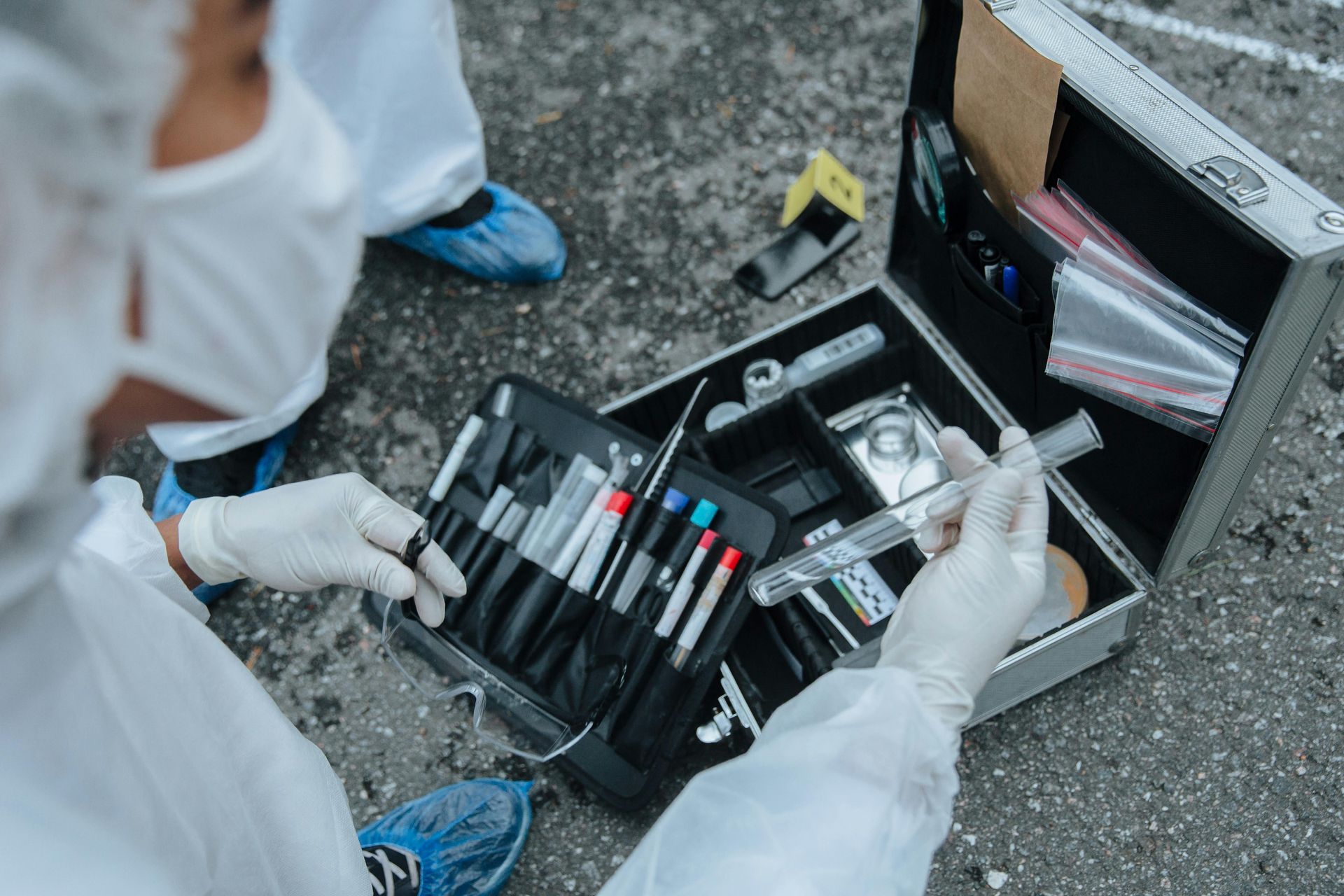
Physical and forensic evidence. The prosecution will rely on crime scene analysis, DNA evidence, ballistics reports, autopsy findings, blood spatter analysis, surveillance footage, and any other physical evidence that connects the defendant to the killing. Each piece of forensic evidence is subject to challenge — lab errors, chain-of-custody failures, contamination, and faulty analysis are more common than most people realize.
Witness testimony. Eyewitness identifications, cooperating witness statements, and jailhouse informant testimony are staples of murder prosecutions. Each carries significant reliability concerns. Eyewitness misidentification is one of the leading causes of wrongful convictions in the United States. Cooperating witnesses often testify in exchange for reduced charges on their own cases, creating powerful incentives to embellish or fabricate. Jailhouse informants are notoriously unreliable.
Digital evidence. Cell phone records, text messages, social media posts, GPS data, surveillance camera footage, and internet search history are increasingly central to murder prosecutions. Prosecutors use this evidence to establish the defendant's location, communications, motive, and state of mind. An experienced defense team, including cyber crime expertise, can challenge the interpretation, authenticity, and admissibility of digital evidence.
Statements and confessions. If the defendant made statements to law enforcement — voluntarily or under pressure — the prosecution will use those statements to establish intent and prove the elements of the charge. Miranda violations, coerced confessions, and improper interrogation techniques are grounds for suppressing these statements entirely.
Defense Strategies for Second Degree Murder Charges
A second degree murder charge can be fought — and in many cases, the charges can be reduced, the evidence challenged, or the defendant acquitted entirely. The defense strategies available depend on which subdivision of Penal Law § 125.25 the prosecution is pursuing:
For intentional murder (subdivision 1): The most powerful defense is the extreme emotional disturbance (EED) affirmative defense . If the defense can demonstrate by a preponderance of the evidence that the defendant killed while acting under an extreme emotional disturbance for which there was a reasonable explanation, the jury must convict on manslaughter in the first degree rather than murder. This reduces the sentencing range from 15-25 to life down to 5-25 years determinate — with a guaranteed release date. The defense can also challenge intent entirely, arguing that the defendant did not have the conscious objective of causing death.
For depraved indifference murder (subdivision 2): New York courts have substantially narrowed this theory. The defense can argue that the defendant's conduct, while reckless, did not exhibit the specific mental state of "depraved indifference" — which the Court of Appeals has described as requiring a wanton cruelty, brutality, or callousness directed at a particular victim. If successful, this argument reduces the charge to manslaughter in the second degree (3.5-15 years). Many depraved indifference murder convictions have been reversed on appeal and reduced to manslaughter based on this evolving legal standard.
For felony murder (subdivision 3): The defense may argue that the defendant did not commit or participate in the underlying felony, that the death was not "in furtherance of" the felony or during "immediate flight," or that the defendant could not have reasonably foreseen that a death would result. An affirmative defense is also available if the defendant was not armed, had no reason to believe any co-participant was armed, and had no reason to believe any participant intended to engage in conduct likely to cause death.
Across all subdivisions: Self-defense under Penal Law § 35.15 is a complete defense that results in acquittal. Alibi evidence — proving the defendant was not at the scene — collapses the prosecution's case entirely. Misidentification challenges through expert testimony and cross-examination can undermine the reliability of witness identifications. Constitutional challenges — including motions to suppress illegally obtained evidence, coerced confessions, or evidence obtained through warrantless searches — can remove critical pieces of the prosecution's case.
At Marwaha Law Group, we take a cutting-edge approach to defense. Our firm uses focus groups and mock trials to test defense strategies before setting foot in a courtroom, helping us understand how jurors will perceive complex evidence and refine our narrative accordingly. Nipun Marwaha's experience as a former prosecutor means we know exactly how the government builds these cases — and how to take them apart.
Second Degree Murder vs. First Degree Murder in New York
People often assume that second degree murder is significantly "less serious" than first degree murder. In terms of sentencing, the difference is meaningful but not as dramatic as many expect. First degree murder under Penal Law § 125.27 carries a minimum of 20-25 years to life or life without parole, compared to second degree murder's 15-25 to life range. The more significant difference is in the type of conduct each statute covers. First degree murder requires specific aggravating factors — killing a law enforcement officer, a judge, a witness, or committing murder for hire, among others. A defendant must be 18 or older to face a first degree murder charge.
For defense purposes, the distinction matters because first degree murder charges are relatively rare and require proof of both intentional killing and the specific aggravating circumstance. Second degree murder is far more commonly charged and offers more defense pathways — including the EED defense, challenges to depraved indifference, and felony murder affirmative defenses — that are not available in first degree cases.
Second Degree Murder vs. Manslaughter: Why the Distinction Is Everything
If you have read our comprehensive guide on murder vs. manslaughter in New York, you know that the line between these charges is where most homicide cases are decided. The key distinctions that determine whether a case is charged as murder or manslaughter include the defendant's mental state (intent to kill vs. intent to injure vs. recklessness), the presence or absence of extreme emotional disturbance, and the degree of recklessness involved.
The sentencing consequences of this distinction are staggering. Second degree murder carries 15-25 years to life with no guaranteed release date — the defendant may die in prison. Manslaughter in the first degree carries 5-25 years with a definite release date. Manslaughter in the second degree carries 3.5-15 years. Criminally negligent homicide carries up to 4 years or probation. A defense attorney who can shift a case from murder to manslaughter is not merely reducing numbers on paper — they are fundamentally changing whether a defendant will ever walk free again.
Where Second Degree Murder Cases Are Prosecuted in the New York Area
Second degree murder cases in the greater New York area are prosecuted by dedicated homicide bureaus within each District Attorney's office. In Nassau County, cases go through the court system in Mineola. In Suffolk County, they are prosecuted in Riverhead. In New York City, each borough's DA office — Manhattan, Brooklyn, Queens, the Bronx, and Staten Island — maintains specialized homicide units staffed with experienced prosecutors who handle nothing but violent crime cases.
Marwaha Law Group is headquartered at 1539 Franklin Avenue in Mineola, directly within the Nassau County court system. We represent clients facing second degree murder charges throughout the New York metropolitan area, including Nassau County, Suffolk County, Queens, Brooklyn, Manhattan, the Bronx, and Staten Island. We know the prosecutors, the judges, and the courtroom dynamics in each jurisdiction — and we use that knowledge to build stronger defenses for our clients.
Related Charges That Accompany Second Degree Murder
Prosecutors rarely charge second degree murder in isolation. Additional charges are routinely filed to maximize sentencing exposure and create leverage during negotiations. Common companion charges include assault in the first or second degree(as lesser included offenses that give the jury options beyond all-or-nothing), criminal possession of a weapon, criminal use of a firearm, conspiracy, drug offenses(when the homicide is related to drug activity), tampering with evidence, and hindering prosecution. Each charge adds complexity and potential sentencing exposure, making comprehensive defense representation essential from the earliest stage of the case.
What to Do If You Are Charged with Second Degree Murder
If you or a loved one have been arrested or are under investigation for second degree murder in New York, the actions you take right now will shape everything that follows. Here is what you need to know:
Do not speak to anyone about the case without an attorney. This includes law enforcement, detectives, family members, friends, cellmates, and anyone else. Everything you say can and will be used against you. The right to remain silent exists for a reason — exercise it.
Secure experienced defense representation immediately. Murder cases move quickly at the outset — arraignment, bail applications, grand jury proceedings, and evidence preservation all occur within the first days and weeks. The earlier a defense attorney is involved, the more opportunities exist to shape the trajectory of the case. At Marwaha Law Group, we are available 24/7 for emergency consultations because we know arrests do not follow office hours.
Understand that the initial charge is not necessarily the final charge. Second degree murder charges are frequently reduced through plea negotiations or at trial through mitigation defenses like EED. Charges can also be dismissed if the evidence is insufficient or improperly obtained. Do not assume the worst — but do take the charge with the utmost seriousness and get the right legal team fighting for you.
Protect Your Future — Contact Marwaha Law Group Today
A second degree murder charge in New York carries the weight of a potential life sentence. The penalties are measured not in years but in decades, and the parole system offers no guarantees. But a charge is not a conviction. The prosecution must prove every element beyond a reasonable doubt, and there are real, proven defense strategies — from the extreme emotional disturbance defense to challenges against depraved indifference, from suppression motions to self-defense claims — that can reduce charges, secure acquittals, and preserve a defendant's chance at a meaningful life.
At Marwaha Law Group, PLLC, founding attorney Nipun Marwaha brings the perspective of a former prosecutor to every murder case. He has built these cases from the government's side and knows exactly where they are vulnerable. Our firm uses focus groups and mock trials to refine defense narratives, and we provide honest, transparent counsel from the moment you call. We represent clients in courts throughout Nassau County, Queens, Brooklyn, Manhattan, Suffolk County, and the entire New York metropolitan area.
Your freedom and your future are on the line. Call Marwaha Law Group now at (516) 988-8866 for a free, confidential consultation, or book a consultation online. We are available 24/7 and ready to fight for you.


