

Revenge Porn Laws in New York: Penalties, Defenses, and Your Rights
A single text message. A post made in a moment of anger. A photograph shared with one person who then passed it along. In New York, any of these actions can result in criminal charges, an arrest, and a permanent record that follows you for the rest of your life. If you have been accused of sharing intimate images without consent — what most people call "revenge porn" — you need to understand exactly what the law says, what penalties you are facing, and how a New York cyber crime lawyer can build an aggressive defense to protect your future.
New York has taken an increasingly hardline approach to the non-consensual distribution of intimate images. The state enacted its primary revenge porn statute in 2019, and since then, lawmakers have expanded its reach to include AI-generated deepfakes and are actively pushing legislation to criminalize even the threat of sharing such images. Prosecutors across Nassau County, Queens, Brooklyn, and Manhattan treat these cases seriously, and they are not going to give you the benefit of the doubt. At Marwaha Law Group, PLLC, we understand what is at stake, and we are here to fight for you.
In this comprehensive guide, we will break down everything you need to know about revenge porn laws in New York — from the specific elements prosecutors must prove, to the criminal and civil penalties you may face, to the defense strategies that can make the difference between a conviction and a dismissal. Whether you are being investigated, have already been arrested, or are simply trying to understand your rights, this article is designed to give you the clarity and confidence you need to take the right next steps.
What Is Revenge Porn Under New York Law?
Under New York Penal Law Section 245.15 , it is a crime to disseminate or publish an intimate image of another person without their consent when the person sharing the image does so with the intent to cause harm — whether emotional, financial, or physical. The law uses the formal term "Unlawful Dissemination or Publication of an Intimate Image," but it is widely known as New York's revenge porn statute. It applies statewide, covering every county and borough from Mineola and Garden City in Nassau County to Manhattan, Brooklyn, Queens, the Bronx, and Staten Island.
The statute was enacted in 2019, making New York one of over 40 states to criminalize this type of conduct. Before Penal Law 245.15 existed, New York City had its own local ordinance — NYC Administrative Code Section 10-180 (formerly 10-177*3) — that applied only within the five boroughs. The statewide law casts a much wider net and is the statute most commonly used by prosecutors across Long Island, Westchester, and the rest of the state. If you are facing charges under either law, a New York sex crimes defense attorney can evaluate the specifics of your case and identify every available defense.
It is important to understand that this law applies regardless of how the original image was created. Even if the depicted person initially consented to being photographed or recorded, the key legal question is whether the distribution of that image occurred without consent and was done with the intent to cause harm. Prosecutors do not need to prove that the accused took the photograph — only that they shared it under these conditions.
Elements Prosecutors Must Prove in a Revenge Porn Case
To secure a conviction under Penal Law 245.15, the prosecution must establish every element of the offense beyond a reasonable doubt. This is not a simple, straightforward charge — each element can be challenged, and an experienced cyber crime defense attorney will scrutinize every piece of the government's case. The elements include:
An intimate image must exist. The photograph or video must depict an "intimate part" of the complainant's body — defined as the genitals, pubic area, anus, or a female nipple — or show the person engaged in sexual conduct such as intercourse. If the image does not meet this legal definition, the charge may not hold.
The image must have been shared without consent. The prosecution must demonstrate that the depicted individual did not authorize the distribution of the image to others. This means that the person may have consented to the image being taken, or even shared it privately with the defendant, but did not consent to it being forwarded, uploaded, or shown to anyone else.
The accused must have acted with intent to cause harm. This is often the most contested element. The law requires that the person who shared the image did so with the specific intent to cause emotional, financial, or physical harm to the depicted individual. If the accused did not intend to cause harm — for example, if the image was shared accidentally or in a context that lacked malicious intent — this element may be undermined.
Criminal Penalties for Revenge Porn in New York
Unlawful Dissemination or Publication of an Intimate Image under Penal Law 245.15 is classified as a Class A misdemeanor in New York. While it may be tempting to think of a misdemeanor as a minor offense, the reality is that the consequences are far-reaching and can permanently alter the trajectory of your life. The potential penalties include:
Up to one year in jail. A judge has the authority to sentence a convicted individual to any length of incarceration up to the one-year maximum. In New York City, that time would be served at a facility like Rikers Island. In Nassau County and Suffolk County, defendants face time in the county jail. While probation and community service are possible alternatives, the threat of incarceration is very real, and judges often have limited sympathy in cases involving intimate images.
Fines up to $1,000. In addition to potential jail time, the court may impose fines. While the dollar amount may seem modest, it adds to the overall financial burden of criminal defense costs, lost employment, and other collateral consequences.
A permanent criminal record. A misdemeanor conviction in New York appears on criminal background checks and can impact your ability to secure employment, housing, professional licenses, and educational opportunities for years to come. For professionals in fields like healthcare, education, finance, or law, a conviction can effectively end a career. This is one of the many reasons why mounting an aggressive defense from the outset is so critical — and why the team at Marwaha Law Group fights to protect not just your freedom, but your future.
Orders of protection. Almost immediately upon arraignment, the District Attorney will seek — and the court will likely grant — a Restraining Order or Order of Protection that prohibits all contact between the accused and the complainant. Violations of these orders can result in additional criminal charges.
Civil Liability and Family Court Consequences
Criminal prosecution is only one avenue of accountability. Under New York Civil Rights Law Section 52-c, a person depicted in a non-consensually shared intimate image has the right to file a civil lawsuit against the person who distributed it. This means that even if criminal charges are reduced or dismissed, you could still face a civil action seeking substantial monetary damages for emotional distress, lost wages, attorney's fees, and reputational harm.
In New York City specifically, NYC Administrative Code Section 10-180 provides an additional civil remedy for victims within the five boroughs. The statewide and city-level laws are not mutually exclusive — a complainant can pursue both a criminal case and a civil lawsuit simultaneously. A complainant may also file a petition in Family Court for a Restraining Order that can remain in effect for up to five years, regardless of whether a criminal prosecution is pending.
The overlapping nature of these laws means that a single allegation can trigger consequences in criminal court, civil court, and family court at the same time. If you are facing this situation, it is essential to work with a sex crimes defense lawyer who understands how to coordinate your defense across all three forums. At Marwaha Law Group, founding attorney Nipun Marwaha — a former prosecutor who understands how the government builds these cases from the inside — develops defense strategies that account for the full scope of legal exposure.
Revenge Porn Laws in New York Now Cover AI Deepfakes
New York's revenge porn laws are not static. In a significant expansion of the original statute, Governor Hochul signed Senate Bill S1042A into law, making it illegal to disseminate AI-generated explicit images — known as "deepfakes" — of a person without their consent. This amendment updated Penal Law 245.15 to close a loophole that had allowed some accused individuals to argue that because the image was digitally fabricated rather than a real photograph, it did not constitute an "intimate image" under the law.
The deepfake expansion is critically important given the rapid advancement of AI technology. According to cybersecurity researchers, the number of deepfake videos online has grown exponentially, and an overwhelming majority feature non-consensual explicit content targeting women. New York was among the first states in the nation to specifically include deepfakes within its revenge porn criminal statute, and as of mid-2025, 45 states have enacted laws addressing sexually explicit deepfakes in some form.
The implications for criminal defense are significant. If you are accused of creating or sharing a deepfake intimate image, you face the same Class A misdemeanor penalties as someone accused of sharing a real photograph. The prosecution will attempt to prove the same elements — lack of consent and intent to cause harm — and the defense strategies available to you require a cyber crime criminal defense attorney with a deep understanding of both the legal framework and the underlying technology.

Pending Legislation: Criminalizing Threats to Share Intimate Images
New York lawmakers are not finished expanding the reach of these laws. In April 2025, the New York State Senate voted to approve Senate Bill S205, which would amend Penal Law 245.15 to criminalize threats to disseminate or publish intimate images — even if the images are never actually shared. The bill would also extend coverage to content that has been digitally created or altered using artificial intelligence.
If enacted, this legislation means that simply threatening to share an intimate image — whether in a text message, an email, or a face-to-face conversation — could result in criminal charges carrying up to one year in jail and fines. This bill was previously approved by the Senate in 2024 but did not advance in the Assembly. Its reintroduction in 2025 signals that New York is moving toward an even broader definition of intimate image-based crimes.
For anyone accused of making such threats, this pending legislation underscores the urgency of seeking legal representation immediately. A conversation that you believed was private, or a statement made in the heat of an argument, could become the basis for a criminal prosecution. If you are being investigated for any conduct related to intimate images, contact a Nassau County sex crimes defense attorney before speaking to law enforcement.
The Federal Landscape: The Take It Down Act
Beyond New York state law, the federal government has also entered the fight against non-consensual intimate images. In May 2025, the Take It Down Act was signed into federal law, creating nationwide protections for victims of both real and AI-generated non-consensual intimate imagery. The law requires online platforms to remove such content upon request and provides federal law enforcement with clearer authority to prosecute offenders.
For individuals living in Nassau County, Queens, Brooklyn, or anywhere in the New York metropolitan area, this means that sharing intimate images without consent can now trigger both state and federal consequences. Federal charges carry their own set of penalties and are prosecuted in a different court system with different rules and procedures. If your case involves interstate conduct — for example, sharing images across state lines via social media or email — you may need a federal criminal defense lawyer in addition to state-level representation. Marwaha Law Group handles cases in both state and federal courts across New York.
The Connection Between Revenge Porn and Sextortion
Revenge porn charges frequently overlap with sextortion — a growing form of cyber crime in which someone threatens to share intimate images unless the victim complies with financial or personal demands. The FBI has reported a dramatic increase in sextortion cases, and federal authorities have identified thousands of victims in recent years, with reported losses exceeding $15 million in a single year. The average financial impact on an individual sextortion victim is approximately $2,400, but the emotional toll is immeasurable.
If you are accused of sextortion in connection with intimate images, the charges can escalate significantly beyond a misdemeanor. Depending on the circumstances, prosecutors may pursue charges for extortion, federal internet fraud, cyberstalking, or harassment — each of which carries its own penalties. Cases involving minors are treated with extreme severity at the federal level and can result in decades of imprisonment.
The rise of sextortion also means that individuals can be falsely accused of threatening to share images they never actually intended to distribute. A misinterpreted text, a heated breakup conversation, or a misunderstanding about the nature of a digital exchange can be twisted into a criminal allegation. An experienced defense attorney will investigate the full context of the communication, challenge the prosecution's interpretation of intent, and fight to protect you from charges that do not reflect reality.
Defense Strategies for Revenge Porn Charges in New York
Being accused of sharing intimate images does not mean you are guilty. The prosecution bears the burden of proving every element of the offense beyond a reasonable doubt, and there are several defense strategies that a skilled criminal defense attorney can pursue:
Challenging intent. The law requires proof that the accused acted with the specific intent to cause emotional, financial, or physical harm. If the images were shared without malicious purpose — for example, in the course of seeking advice, reporting abuse, or as part of a misunderstanding — the intent element may not be met. This is often the strongest line of defense in revenge porn cases.
Consent disputes. In some cases, the question of whether the depicted person consented to distribution is not as clear-cut as the prosecution suggests. If there is evidence that the complainant authorized or encouraged the sharing of the image — even implicitly — this can undermine the prosecution's case.
Challenging the nature of the image. The statute requires that the image depict a specifically defined "intimate part" or sexual conduct. If the image does not meet this legal threshold, the charge may be dismissed.
Constitutional challenges. Defense attorneys may challenge the application of the statute on First Amendment grounds, particularly in cases involving artistic expression, commentary, or images that straddle the line between protected speech and criminal conduct.
Procedural and evidentiary challenges. How did law enforcement obtain the evidence? Were proper warrants issued for the search of digital devices? Was the chain of custody for digital evidence maintained? Any violation of your constitutional rights during the investigation can result in evidence being suppressed, which may fatally weaken the prosecution's case.
At Marwaha Law Group, we take a cutting-edge approach to defense. Our firm uses focus groups and mock trials to test defense strategies before stepping into a courtroom, allowing us to understand how jurors will perceive complex digital evidence and refine our narrative accordingly. Founding attorney Nipun Marwaha's background as a former prosecutor means we know exactly how the government builds these cases — and how to dismantle them.
Why Location Matters: Revenge Porn Cases Across New York
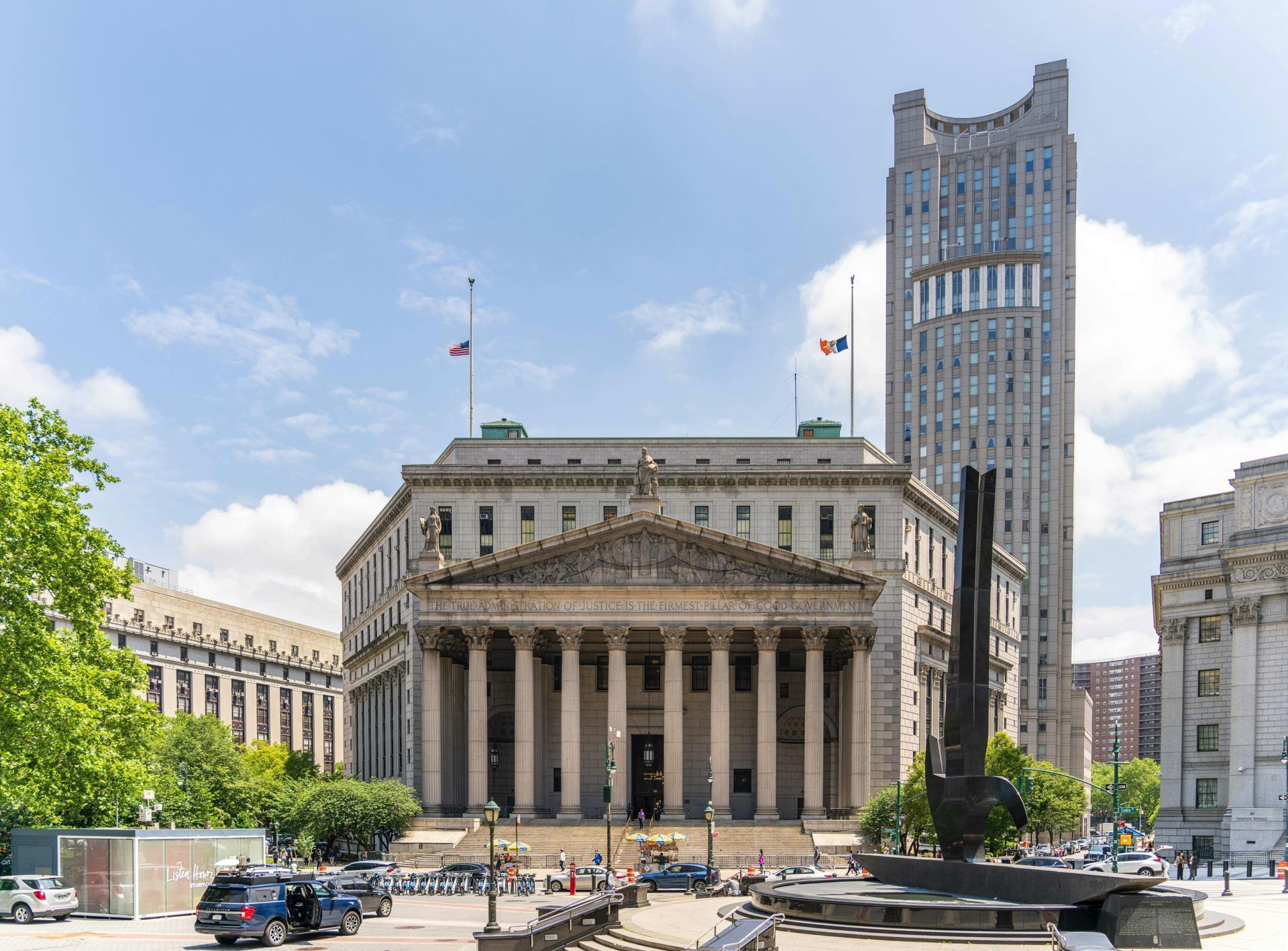
Where your case is prosecuted can significantly impact the process and outcome. Each county and borough in New York has its own District Attorney's office, its own judges, and its own approach to handling intimate image cases. In Nassau County, cases are typically prosecuted in Mineola, where the District Attorney's office has dedicated resources to technology-related crimes. In Queens, Brooklyn, and Manhattan, the volume of cases is higher but the DA's offices are equally aggressive in pursuing these charges.
Marwaha Law Group is headquartered at 1539 Franklin Avenue in Mineola, placing us at the heart of the Nassau County court system. But our practice extends throughout the New York metropolitan area. We represent clients facing revenge porn and sex crime charges in Queens, Brooklyn, Manhattan, the Bronx, Staten Island, and Suffolk County. Wherever you are facing charges, we bring the same level of aggressive, strategic defense.
Related Charges That Often Accompany Revenge Porn Allegations
Revenge porn charges rarely exist in isolation. Prosecutors frequently stack additional charges to increase pressure on defendants and leverage during plea negotiations. Related offenses that may accompany a Penal Law 245.15 charge include:
Cyberstalking and cyber harassment — if the accused is alleged to have engaged in a pattern of online conduct directed at the complainant, prosecutors may add harassment or stalking charges that carry their own penalties.
Identity theft — if the accused used the complainant's personal information without authorization in connection with the images, identity theft charges may be added.
Computer fraud — if the accused gained access to the images by hacking into accounts, devices, or cloud storage, federal computer fraud charges under the Computer Fraud and Abuse Act may apply.
Each additional charge increases the potential penalties and complexity of your case, making it even more critical to have a defense attorney who can address the full scope of the accusations against you.
What to Do If You Are Accused of Sharing Intimate Images in New York
If you are under investigation or have been arrested for revenge porn in New York, the steps you take in the first 24 to 48 hours can define the trajectory of your entire case. Here is what you need to know:
Exercise your right to remain silent. Do not speak to law enforcement, investigators, or anyone else about the allegations without an attorney present. Even casual statements can be used against you in court. Detectives and federal agents are trained to extract incriminating statements, and anything you say — no matter how innocent it seems — can be taken out of context.
Do not destroy evidence. Deleting text messages, images, or social media posts after learning of an investigation can result in additional charges for tampering with evidence or obstruction of justice. Preserve everything and let your attorney advise you on how to handle digital evidence.
Contact a defense attorney immediately. The earlier an experienced attorney is involved in your case, the more opportunities there are to shape the direction of the investigation, challenge the evidence, and protect your rights. Marwaha Law Group is available 24/7 for emergencies because we know that arrests and investigations do not follow a 9-to-5 schedule.
Understand the full scope of your exposure. As we have discussed, a single allegation can trigger consequences in criminal court, civil court, and family court. Your attorney should evaluate all potential forums and develop a coordinated strategy that addresses each one.
Protect Your Future — Contact Marwaha Law Group Today
Facing a revenge porn accusation in New York is one of the most stressful and frightening experiences a person can go through. The stigma alone can feel overwhelming, even before considering the criminal penalties, civil liability, and professional consequences that may follow. But an accusation is not a conviction, and with the right defense team in your corner, there are real opportunities to challenge the charges, protect your record, and move forward with your life.
At Marwaha Law Group, PLLC, we treat every client like family. Founding attorney Nipun Marwaha — a former prosecutor, recognized Super Lawyer Rising Star, and a relentless advocate for the accused — brings an insider's understanding of how the government prosecutes these cases and uses that knowledge to build defenses that expose weaknesses in the prosecution's evidence. We provide honest, transparent counsel and aggressive representation in courts throughout Nassau County, Queens, Brooklyn, Manhattan, Suffolk County, and beyond.
Do not wait another day to get the legal help you need. Call Marwaha Law Group now at (516) 988-8866 for a free, confidential consultation, or book a consultation online. We are available 24/7 and ready to fight for your rights.


